
Luffing
Return To Index
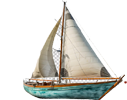
Luffing is a sailing term for when a sail flaps, shakes, and loses power because the bow is pointed too close to the wind or the sail is eased too far. It causes a loss of forward momentum, making it useful for slowing down or stopping. It is sometimes called "pinching" or "feathering".
Key Aspects of Luffing:
Cause: Steering into the wind ("heading up" or "luffing up") or easing the sail sheets too far beyond the optimal trim.
Result: The sail shakes/flaps, power is lost, and the boat slows down.
Purpose:
Slowing/Stopping: Used in strong winds to reduce power or stop the boat completely, such as when returning to a dock.
Steering: To "luff up" means turning the bow closer to the wind (opposite of bearing away).
Racing: Used by a leeward boat to force a windward boat to change course, sometimes called "luffing rights".
Prevention/Correction: To stop a sail from luffing, you must either "sheet in" (pull the sail in tighter) or "bear away" (steer away from the wind).
Context: The forward edge of a sail is called the "luff," which is where the flapping usually begins.
Key Aspects of Luffing:
Cause: Steering into the wind ("heading up" or "luffing up") or easing the sail sheets too far beyond the optimal trim.
Result: The sail shakes/flaps, power is lost, and the boat slows down.
Purpose:
Slowing/Stopping: Used in strong winds to reduce power or stop the boat completely, such as when returning to a dock.
Steering: To "luff up" means turning the bow closer to the wind (opposite of bearing away).
Racing: Used by a leeward boat to force a windward boat to change course, sometimes called "luffing rights".
Prevention/Correction: To stop a sail from luffing, you must either "sheet in" (pull the sail in tighter) or "bear away" (steer away from the wind).
Context: The forward edge of a sail is called the "luff," which is where the flapping usually begins.