
Roll
Return To Index
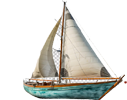
Roll is the side-to-side tilting or rocking motion of a boat around its longitudinal (bow-to-stern) axis, typically caused by waves or wind. It causes the vessel to alternate leaning toward the port (left) and starboard (right) sides. Excessive rolling can reduce performance, but it is also intentionally used in "roll tacking" to increase speed.
Key Details About Rolling in Sailing:
Axis of Motion: The rotation occurs along the front-to-back axis (X-axis).
Causes: Primarily driven by waves hitting the side of the boat (broadside) or strong wind forcing.
Roll vs. Heel: While "roll" refers to the rocking motion, "heel" refers to the stable, consistent, or intentional tipping caused by wind in the sails.
Control/Mitigation: Sailors can manage heavy rolling by decreasing sail area (reefing) or shifting crew weight to the windward side to keep the boat more stable.
"Roll" Techniques: Roll-tacking or roll-gybing is a technique used in light winds to accelerate by deliberately heeling the boat, then flattening it to create extra drive.
"Roll" vs. "Rolled": In cargo shipping, a "rolled" container is one that missed its scheduled, intended vessel.
Key Details About Rolling in Sailing:
Axis of Motion: The rotation occurs along the front-to-back axis (X-axis).
Causes: Primarily driven by waves hitting the side of the boat (broadside) or strong wind forcing.
Roll vs. Heel: While "roll" refers to the rocking motion, "heel" refers to the stable, consistent, or intentional tipping caused by wind in the sails.
Control/Mitigation: Sailors can manage heavy rolling by decreasing sail area (reefing) or shifting crew weight to the windward side to keep the boat more stable.
"Roll" Techniques: Roll-tacking or roll-gybing is a technique used in light winds to accelerate by deliberately heeling the boat, then flattening it to create extra drive.
"Roll" vs. "Rolled": In cargo shipping, a "rolled" container is one that missed its scheduled, intended vessel.