
Waterline
Return To Index
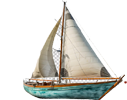
A waterline is the specific line where a ship or boat's hull meets the surface of the water, representing the boundary between the submerged part of the vessel and the hull above water. It determines the vessel's draft, stability, and maximum theoretical hull speed, often marked by a painted line or the "Plimsoll line".
Key Aspects of the Waterline:
Definition & Purpose: The waterline indicates the vessel's buoyancy and is crucial for calculating draft, which is the vertical distance between the waterline and the bottom of the keel.
Load Waterline Length (LWL): This is the length of the hull at the surface of the water. It is critical for performance, as a longer LWL generally allows for higher displacement hull speeds.
Variability: The waterline changes based on how heavily a boat is loaded, with more weight causing the boat to sit lower in the water.
Sailing Dynamics: In sailing, the waterline length can change as the boat heels, impacting its speed and handling.
Design Context: In naval architecture, "waterlines" are horizontal lines on a plan that represent the shape of the hull parallel to the water's surface.
Key Aspects of the Waterline:
Definition & Purpose: The waterline indicates the vessel's buoyancy and is crucial for calculating draft, which is the vertical distance between the waterline and the bottom of the keel.
Load Waterline Length (LWL): This is the length of the hull at the surface of the water. It is critical for performance, as a longer LWL generally allows for higher displacement hull speeds.
Variability: The waterline changes based on how heavily a boat is loaded, with more weight causing the boat to sit lower in the water.
Sailing Dynamics: In sailing, the waterline length can change as the boat heels, impacting its speed and handling.
Design Context: In naval architecture, "waterlines" are horizontal lines on a plan that represent the shape of the hull parallel to the water's surface.