
Boom
Return To Index
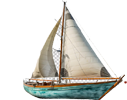
A sailboat boom is a horizontal spar, typically made of aluminum or carbon fiber, attached to the mast to support the foot of the mainsail. It pivots via a "gooseneck" fitting, allowing it to swing freely to manage sail angle and shape for optimal wind control. The boom acts as a key control mechanism, with the mainsail's back corner (clew) attached to its outer end.
Key Aspects of a Sailboat Boom:
Function: Controls the mainsail's foot, allowing for proper trim. It uses a "mainsheet" (line system) to control its position and a "boom vang" to control its vertical position.
Safety Hazard: Due to its potential to swing rapidly during maneuvers like tacking or gybing, it is a major source of injury and requires crew awareness.
Components: Attached to the mast by a gooseneck, supported by a "topping lift" (when not in use) and secured by "lazy jacks" or "boom gallows".
Types: Standard, furling (rolls the sail inside), and loose-footed (foot not attached to the boom).
A lighter, stronger boom, such as one made of carbon fiber, reduces weight aloft, which minimizes boat rolling, especially when sailing downwind.
Key Aspects of a Sailboat Boom:
Function: Controls the mainsail's foot, allowing for proper trim. It uses a "mainsheet" (line system) to control its position and a "boom vang" to control its vertical position.
Safety Hazard: Due to its potential to swing rapidly during maneuvers like tacking or gybing, it is a major source of injury and requires crew awareness.
Components: Attached to the mast by a gooseneck, supported by a "topping lift" (when not in use) and secured by "lazy jacks" or "boom gallows".
Types: Standard, furling (rolls the sail inside), and loose-footed (foot not attached to the boom).
A lighter, stronger boom, such as one made of carbon fiber, reduces weight aloft, which minimizes boat rolling, especially when sailing downwind.