
Shrouds
Return To Index
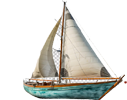
Shrouds are critical standing rigging cables on a sailboat that provide lateral (side-to-side) support to the mast, preventing it from falling over. Made of stainless steel wire or rod, they run from the sides of the mast to the deck's chainplates, frequently using spreaders to widen their angle and increase support.
Key Details About Shrouds
Purpose: They secure the mast in an upright position and prevent it from swaying laterally under wind pressure.
Connection Points: Shrouds attach to the sides of the mast and connect to the hull at the chainplates.
Components: Often used with spreaders (metal bars pushing the shrouds outward) to increase support angles. They are tightened using turnbuckles.
Types of Shrouds:
Cap Shrouds (Uppers): Run from the top of the mast to the deck.
Lower Shrouds: Support the lower sections of the mast.
Intermediate Shrouds: Found on taller rigs, supporting the middle section, often passing over middle spreaders.
Rigging Style: They can be continuous (running from the mast to the deck) or discontinuous (shorter lengths connecting between spreaders).
Difference from Stays: While shrouds support the mast side-to-side, stays (such as the forestay and backstay) provide longitudinal support to prevent the mast from falling forward or backward.
Key Details About Shrouds
Purpose: They secure the mast in an upright position and prevent it from swaying laterally under wind pressure.
Connection Points: Shrouds attach to the sides of the mast and connect to the hull at the chainplates.
Components: Often used with spreaders (metal bars pushing the shrouds outward) to increase support angles. They are tightened using turnbuckles.
Types of Shrouds:
Cap Shrouds (Uppers): Run from the top of the mast to the deck.
Lower Shrouds: Support the lower sections of the mast.
Intermediate Shrouds: Found on taller rigs, supporting the middle section, often passing over middle spreaders.
Rigging Style: They can be continuous (running from the mast to the deck) or discontinuous (shorter lengths connecting between spreaders).
Difference from Stays: While shrouds support the mast side-to-side, stays (such as the forestay and backstay) provide longitudinal support to prevent the mast from falling forward or backward.