
Luff (Main)
Return To Index
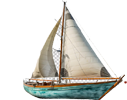
The luff is the forward, leading edge of a mainsail that runs vertically along the mast, stretching from the head (top) down to the tack (lower front corner). It is responsible for creating the initial airfoil shape of the sail, typically attached to the mast via a bolt rope, slides, or cars.
Key Details of the Mainsail Luff:
Attachment: The luff attaches to the mast using a luff rope (boltrope) that slides into a mast track, or via luff slides/cars connected to the mast.
Tension Control: Luff tension is adjusted primarily by the halyard (which raises the sail) and the cunningham (a line near the tack that pulls down on the luff to control draft).
Function: Proper luff tension controls the position of the sail's draft (maximum curvature). Tightening the luff moves the draft forward, which helps in heavy winds; loosening it allows the draft to move aft for more power in light air.
Aerodynamics: As the forward edge, it is the first part of the sail to catch the wind. If the luff is too loose or the sail is steered too close to the wind, the luff will "curl" or shake, known as "luffing".
Corners: The luff extends from the head (top corner) to the tack (bottom-forward corner).
It is often confused with "luffing," which is the flapping of the sail when it is angled too directly into the wind.
Key Details of the Mainsail Luff:
Attachment: The luff attaches to the mast using a luff rope (boltrope) that slides into a mast track, or via luff slides/cars connected to the mast.
Tension Control: Luff tension is adjusted primarily by the halyard (which raises the sail) and the cunningham (a line near the tack that pulls down on the luff to control draft).
Function: Proper luff tension controls the position of the sail's draft (maximum curvature). Tightening the luff moves the draft forward, which helps in heavy winds; loosening it allows the draft to move aft for more power in light air.
Aerodynamics: As the forward edge, it is the first part of the sail to catch the wind. If the luff is too loose or the sail is steered too close to the wind, the luff will "curl" or shake, known as "luffing".
Corners: The luff extends from the head (top corner) to the tack (bottom-forward corner).
It is often confused with "luffing," which is the flapping of the sail when it is angled too directly into the wind.