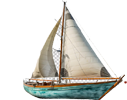

Spinnaker
Return To Index
A spinnaker is a large, lightweight, balloon-shaped sail used for downwind sailing, featuring three main corners: the head (top, connected to the halyard), and two lower corners, the tack (windward/pole side) and clew (leeward/sheet side). Essential control components include the spinnaker pole, sheets, guys, and topping lift.
Rigging and Control Lines
Spinnaker Halyard: A line run up the mast to raise the sail.
Spinnaker Pole: A spar used with symmetric spinnakers to hold the windward tack away from the boat.
Sheets: Lines attached to the clew (and sometimes tack) to control the sail's angle to the wind.
Guys (or Braces): Lines that control the position of the spinnaker pole (windward side).
Topping Lift: A line that supports the weight of the spinnaker pole.
Foreguy (or Downhaul): A line that holds the spinnaker pole down.
Types of Spinnakers
Symmetric: Primarily used for deep downwind sailing, with two sides of equal length.
Asymmetric: Similar to a large genoa, used for reaching and deeper angles, often attached to a bowsprit.
Rigging and Control Lines
Spinnaker Halyard: A line run up the mast to raise the sail.
Spinnaker Pole: A spar used with symmetric spinnakers to hold the windward tack away from the boat.
Sheets: Lines attached to the clew (and sometimes tack) to control the sail's angle to the wind.
Guys (or Braces): Lines that control the position of the spinnaker pole (windward side).
Topping Lift: A line that supports the weight of the spinnaker pole.
Foreguy (or Downhaul): A line that holds the spinnaker pole down.
Types of Spinnakers
Symmetric: Primarily used for deep downwind sailing, with two sides of equal length.
Asymmetric: Similar to a large genoa, used for reaching and deeper angles, often attached to a bowsprit.