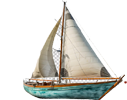

Sailing Dinghy
Return To Index
A sailing dinghy is a small, lightweight, open boat, typically 6–20 feet (1.8–6.1 m) long, powered by one or two sails and designed for 1–2 people. Unlike keelboats, they lack fixed weighted keels, using a retractable centerboard or daggerboard for stability and a removable rudder, making them highly responsive, fast, and often used for training, racing, or recreation.
Key Characteristics and Components
Design: Usually constructed from fiberglass, wood, or aluminum. Many are planning hulls designed to sit on top of the water for high speeds.
Rigging: Simple sail plan consisting of a mainsail and often a jib. Some high-performance boats also use a spinnaker.
Stability: Relies heavily on the crew's weight (hiking) to remain upright, making them prone to capsizing but easy to right.
Portability: Typically stored ashore on a trailer or launching trolley and can be easily transported.
Versatility: Used as trainers (e.g., Opti, Laser), racers (e.g., 420), or as tenders for larger yachts.
Key Characteristics and Components
Design: Usually constructed from fiberglass, wood, or aluminum. Many are planning hulls designed to sit on top of the water for high speeds.
Rigging: Simple sail plan consisting of a mainsail and often a jib. Some high-performance boats also use a spinnaker.
Stability: Relies heavily on the crew's weight (hiking) to remain upright, making them prone to capsizing but easy to right.
Portability: Typically stored ashore on a trailer or launching trolley and can be easily transported.
Versatility: Used as trainers (e.g., Opti, Laser), racers (e.g., 420), or as tenders for larger yachts.