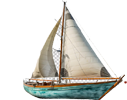

Catamarans
Return To Index
A catamaran is a multi-hulled sailboat featuring two parallel hulls of equal size. This design distinguishes it from traditional monohulls by providing a wider stance, which significantly enhances stability and reduces heeling (tilting) while under sail.
Key Design Features
Dual-Hull Structure: The two hulls are connected by a bridge deck or frame, which typically houses the main living areas.
Shallow Draft: Catamarans generally lack a deep weighted keel, allowing them to navigate much shallower waters and anchor closer to shore than monohulls.
Spacious Layout: The wide beam (width) creates expansive deck space and large interior saloons. Cabins are often located separately within each hull, offering increased privacy.
Propulsion: While primarily wind-driven, most modern sailing catamarans are equipped with twin inboard engines—one in each hull—for auxiliary power and precise maneuverability.
Performance Characteristics
Stability: Because weight is distributed across two hulls, catamarans provide a level platform that minimizes rolling, making them popular for those prone to seasickness.
Speed: They often achieve higher speeds than monohulls because their slender hulls create less hydrodynamic resistance (drag).
Sailing Angles: While fast on a reach (wind from the side) or downwind, most cruising catamarans cannot "point" as close to the wind as monohulls when sailing upwind.
Key Design Features
Dual-Hull Structure: The two hulls are connected by a bridge deck or frame, which typically houses the main living areas.
Shallow Draft: Catamarans generally lack a deep weighted keel, allowing them to navigate much shallower waters and anchor closer to shore than monohulls.
Spacious Layout: The wide beam (width) creates expansive deck space and large interior saloons. Cabins are often located separately within each hull, offering increased privacy.
Propulsion: While primarily wind-driven, most modern sailing catamarans are equipped with twin inboard engines—one in each hull—for auxiliary power and precise maneuverability.
Performance Characteristics
Stability: Because weight is distributed across two hulls, catamarans provide a level platform that minimizes rolling, making them popular for those prone to seasickness.
Speed: They often achieve higher speeds than monohulls because their slender hulls create less hydrodynamic resistance (drag).
Sailing Angles: While fast on a reach (wind from the side) or downwind, most cruising catamarans cannot "point" as close to the wind as monohulls when sailing upwind.